



Beta-lactam Antibiotics
-
Beta-lactam Antibiotics (33)

- 1
- 2
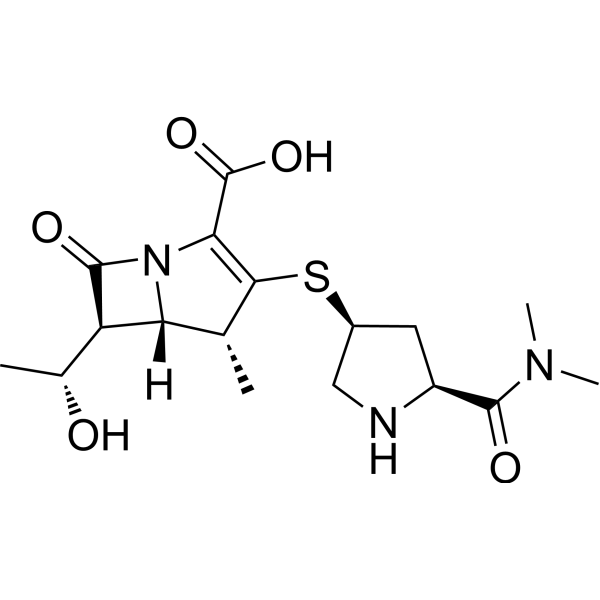
- Formula: C17H25N3O5S
- Molecular Weight: 383.46
Meropenem (SM 7338) is a carbapenem antibiotic with broad-spectrum antibacterial activity. Meropenem has activity against susceptible and resistant N. gonorrhoeae (MIC value of 0.02-0.06 mg/mL), H. influenzae (MIC value of 0.03-0.12 mg/mL), and H. ducreyi (MIC value of 0.015-0.12 mg/mL).
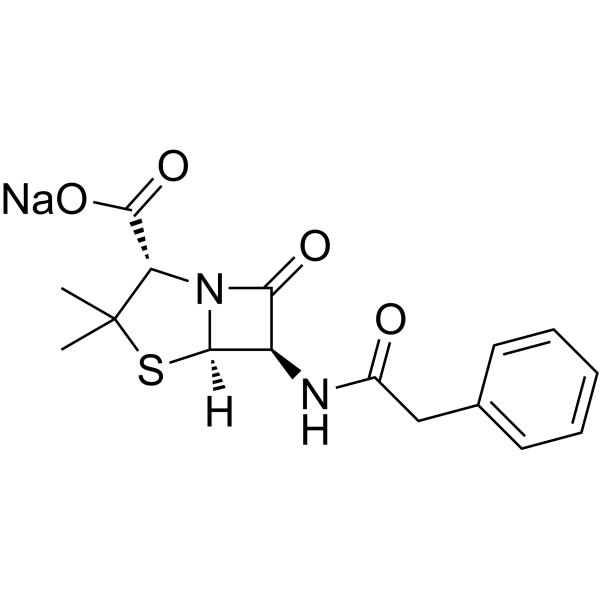
- Formula: C16H17N2NaO4S
- Molecular Weight: 356.37
Penicillin G sodium salt is a typical β-lactam antibiotic.
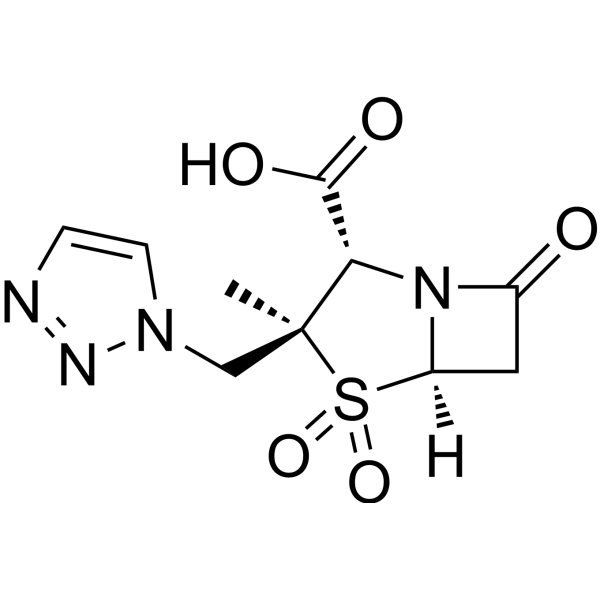
- Formula: C10H12N4O5S
- Molecular Weight: 300.29
Tazobactam (CL-298741) is a potent β-lactamases inhibitor and penicillin antibiotic. Tazobactam has antibacterial activity. Tazobactam can be used for pneumonia research.
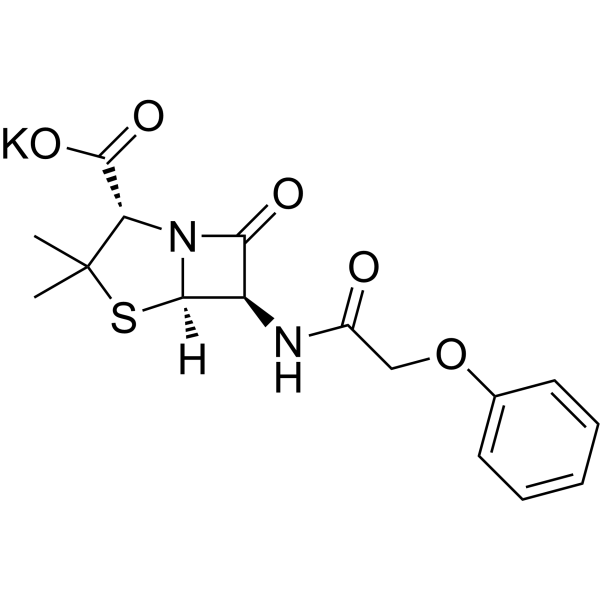
- Formula: C16H17KN2O5S
- Molecular Weight: 388.48
Penicillin V Potassium (Phenoxymethylpenicillin potassium salt) is an orally active antibiotic. Penicillin V Potassium inhibits the growth of Streptococci, C. difficile and S. aureus. Penicillin V Potassium can be used for the research of otitis, sinusitis, pharyngitis and tonsillitis.
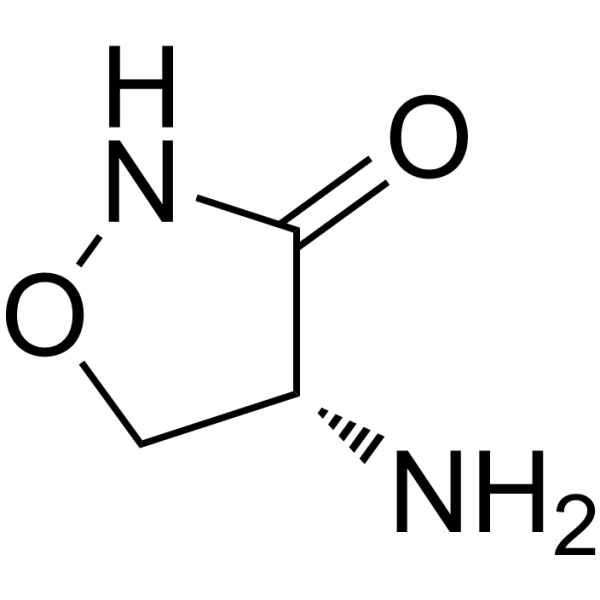
- Formula: C3H6N2O2
- Molecular Weight: 102.09
D-Cycloserine (Standard) is the analytical standard of D-Cycloserine. This product is intended for research and analytical applications. D-Cycloserine is an antibiotic which targets sequential bacterial cell wall peptidoglycan biosynthesis enzymes. D-Cycloserine is a partial NMDA agonist that can improve cognitive functions. D-Cycloserine can be used for multidrug-resistant tuberculosis research.

- Formula: C₁₆H₁₇N₂NaO₄S
- Molecular Weight: 356.37
Penicillin G sodium salt (Standard) is the analytical standard of Penicillin G sodium salt. This product is intended for research and analytical applications. Penicillin G sodium salt is a typical β-lactam antibiotic.

- Formula: C10H12N4O5S
- Molecular Weight: 300.29
Tazobactam (Standard) is the analytical standard of Tazobactam. This product is intended for research and analytical applications. Tazobactam (CL-298741) is a potent β-lactamases inhibitor and penicillin antibiotic. Tazobactam has antibacterial activity. Tazobactam can be used for pneumonia research.

- Formula: C23H24N4O9
- Molecular Weight: 500.46
Nocardicin A is a beta-lactam antibiotic with selective antibacterial activity. Nocardicin A has moderate antibacterial activity against a broad spectrum of Gram-negative bacteria including Proteus and Pseudomonas; it has no inhibitory effect on Staphylococcus, Mycobacterium, fungi, and yeast.

- Formula: C₁₆H₁₇KN₂O₅S
- Molecular Weight: 388.48
Penicillin V (Potassium) (Standard) is the analytical standard of Penicillin V (Potassium). This product is intended for research and analytical applications. Penicillin V Potassium (Phenoxymethylpenicillin potassium salt) is an orally active antibiotic. Penicillin V Potassium inhibits the growth of Streptococci, C. difficile and S. aureus. Penicillin V Potassium can be used for the research of otitis, sinusitis, pharyngitis and tonsillitis.

- Formula: C9H11NO9S2
- Molecular Weight: 341.31
Pluracidomycin A2 (PLM A2) is a carbapenem antibiotic and has anti-Gram-positive bacteria and Gram-negative bacteria activities.

- Formula: C11H14N2O4S
- Molecular Weight: 270.30
Olivanic acid is a β -lactam antibiotic. Olivanic acid has the effect of anti -Gram-positive bacteria and anti-Gram-negative bacteria. Olivanic acid inhibits β-lactamase.

- Formula: C24H26N4O10
- Molecular Weight: 530.48
Formadicin C has the strongest activity against some pseudomonas, Proteus and alkali producing bacilli.

- Formula: C30H34N4O15
- Molecular Weight: 690.61
Formadicin B has strong activity against kinds of pseudomonas, proteobacteria and alkaline-producing bacilli.

- Formula: C13H18N2O5S
- Molecular Weight: 314.36
Epithienamycin A is a carbapenem antibiotic. Epithienamycin A has anti-Gram-positive bacteria and anti-Gram-negative bacteria activity.

- Formula: C15H20N2O4
- Molecular Weight: 292.33
Epiderstatin is a glutarimide antibiotic. Epiderstatin has the activity of inhibiting the filamentous division induced by epidermal growth factor (EGF), but does not inhibit EGF-receptor kinase. Epiderstatin has only weak antifungal activity and no antibacterial effect.

- Formula: C16H21N3O4S
- Molecular Weight: 351.42
Epicillin is found in the strain of Semisynthetic broad-spectrum penicillin with antibacterial activities.

- Formula: C15H20N4O8S
- Molecular Weight: 416.41
Chitinovorin C is a β-lactam antibiotic with a weak inhibitory activity against Gram-negative bacteria.

- Formula: C26H41N9O11S
- Molecular Weight: 687.72
Chitinovorin A is a β-lactam antibiotic with a weak inhibitory activity against Gram-negative bacteria.

- Formula: C23H23ClN4O9
- Molecular Weight: 534.90
Chlorocardicin is a monocyclic beta-lactam. Chlorocardicin has moderate in vitro activity against Enterobacteriaceae and Pseudomonas aeruginosa.

- Formula: C25H29N3O14S2
- Molecular Weight: 659.64
Cephalomycin A shows weak activity against Gram-positive and negative bacteria.
- 1
- 2



